
Your needs, this model
Does it fit your priorities?
Can the standard base print ordinary Tabloid with 350 sheets if a real legacy parallel host is acceptable?
Qualifies with earlier references enabled and connection left flexible. The actual arrangement needs a real parallel host, matching bidirectional cable and compatible driver; no USB converter or network upgrade is assumed.
Explore this need in the finder →Does the base have included Ethernet for those wide documents?
Fails included Ethernet. The network server belongs to different N/GN configurations or an optional expansion, without being part of this base package.
Explore this need in the finder →Will its normal two-input package automatically duplex Letter pages?
Fails automatic duplex. The separate duplex accessory is optional; the standard 350-sheet arrangement does not include automatic page turning.
Explore this need in the finder →A wide-paper reference for a prepared legacy computer
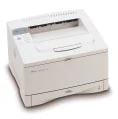
The base HP LaserJet 5000 is an earlier monochrome printer for a deliberately prepared legacy host, rather than a computer expecting an included USB or Ethernet port. It accepts ordinary A3 and Tabloid as well as Letter, Legal and A4, with two included inputs totaling 350 sheets. Its practical fit depends first on the actual computer interface, cable and usable driver.
The exact HP US product page identifies C4110A#ABA and marks it discontinued. This review covers that documented low-voltage base configuration. The original model table distinguishes it from the network-equipped N and GN versions, so their extra input, network card and storage are excluded. No current stock, condition or present-day driver promise is made.
Start with the original parallel or serial requirement
The base includes a bidirectional IEEE-1284 parallel interface and an RS-232 nine-pin serial interface. This review's operating plan uses a real parallel computer port, appropriate bidirectional cable and compatible printer driver. It assumes no USB converter or network expansion card. Check an actual document from the real host before depending on the arrangement.
A serial installation is also documented, but needs its own matching cable and communications settings. The original describes asynchronous data with one start bit, eight data bits, one stop bit and no parity, plus suitable flow control; the panel sets baud rate. A similarly shaped cable alone does not establish a working serial setup.
The original software list concerns Windows 3.1x, Windows 95, Windows NT and period Macintosh or other environments. It also distinguishes PCL 6, PCL 5e and PostScript driver features. Those historical lists do not establish present-day compatibility. Optional Jetdirect servers and wireless equipment do not become included connections, and modern mobile printing remains unconfirmed.
Set the two paper inputs for the actual format
The front multipurpose input holds 100 ordinary sheets and the lower input 250 at the original 20-lb/75-g/m² basis. The actual ordinary-size table supports Letter, Legal, A4, A3 and 11-by-17-inch Tabloid. The 350-sheet capacity for one selected size assumes both inputs contain it; mixed formats divide the available supply.
In the front input, Letter and A4 load long edge toward the engine, while Legal, A3 and Tabloid load short edge toward it. Extend the paper support and its second section for sheets longer than nine inches, keep the stack below the guide tabs and bring the guides to its edges without bending it.
The lower tray's dial and toggle switch tell the printer the size. They do not move its blue rear and side guides, which must be positioned separately. Keep all four paper corners flat below the tabs and match the job's type and size settings. Ordinary lower media are 60–105 g/m²; the broader front-media limit does not transfer to that input or guarantee the same sheet count with thicker stock.
Wider output does not mean automatic duplex or borderless sheets
The automatic duplex accessory is optional on the base 5000. The normal package therefore fails an unattended two-sided requirement. Optional paper feeders can expand input, but neither their 1,100-sheet maximum arrangement nor an added network card is included in the reviewed package.
For large output stacks, adjust the top paper stop. The guide's full-bleed method prints an image on larger paper and trims it to the finished A3 or Tabloid size. That is a useful finishing route, but it does not promise borderless printing directly on a finished-size ordinary sheet.
Up to ten supported envelopes instead use the front input face up, postage end toward the front of the tray and away from the engine. Open and extend the rear output to reduce curl, select the proper envelope settings and keep the stack beneath the tabs. The actual media table gives a 75–105-g/m² envelope range, narrower than a separate brochure line. Do not print both sides of an envelope.
Keep memory, supplies and physical space specific
The base includes 4 MB of memory. Extra DIMMs and the EIO hard disk are optional; the GN's included disk is different equipment. An exact included PIN-held arrangement was not established, so this review does not qualify the base for that selected requirement. It is print-only hardware without a scanner, flatbed, document feeder, copier or fax.
The original technical sheet explicitly rates Letter printing at 16 one-sided pages per minute and lists a 65,000-page maximum monthly duty. No separate recommended monthly range was established. These are manufacturer declarations rather than new tests. A generic same-domain marketing page claiming 50 ppm conflicts with the actual original and is excluded.
Original width is 18.7 inches and guide weight is 50 pounds without the cartridge. Conflicting height/depth figures and diagrams with opening outlines leave exact closed dimensions unconfirmed here. Measure the actual printer with access room and verify its 100–127-V, 50/60-Hz plate. Original supply identifiers also differ between guide and technical sheet; check the exact replacement rather than treating historical yield as remaining toner or current cost.
Key details at a glance
| Color printing | No |
|---|---|
| Scanner | No |
| Copying | No |
| Fax | No |
| Flatbed scanner | No |
| Automatic document feeder | No |
| Automatic two-sided printing | No |
| Automatic two-sided scanning | No |
| Single-pass two-sided scanning | No |
| Color scanning | No |
| Instructed envelope handling | Yes |
| Maximum monthly duty | 65000 pages |
| Included ordinary-paper capacity | 350 sheets |
| Declared one-sided mono Letter rate | 16 pages/min |
| Unit-body width | 18.7 in |
| Unit weight | 50 lb |
| Imaging engine | laser |
Use the exact model’s instructions for operating limits, supplied equipment and version differences.
Paper, software and setup details
Print-rate conditions
Original technical data explicitly rates Letter at 16 one-sided pages per minute. The 65,000-page monthly duty is a maximum, with no separate recommended monthly range established. No A4 rate borrowed, measured result or duplex speed invented. Generic same-domain 50-ppm marketing conflicts with the original and is excluded.
Paper handling
Exact base includes front 100 plus lower 250, total 350 ordinary 20-lb/75-g/m² sheets. Actual lower size table and front instructions support Letter, Legal, A4, A3 and Tabloid. Full selected-size count assumes both inputs contain it. Lower ordinary media 60–105 g/m², front ordinary 60–199; heavier front media need rear straight path and actual thickness changes capacity. Set lower size dial/toggle switch separately from blue rear/side guides, keep flat under tabs and match job settings. Automatic duplexer and extra feeders optional. Front envelopes: up to ten, face up/postage end toward tray front, rear open/extended; use stricter actual table 75–105 g/m² despite brochure 60–105. Full-bleed finished pages need larger paper and trimming.
Scanning arrangement
The original exact 5000 is a monochrome print-only printer without a document scanner, flatbed, feeder, copy function or fax. JetSend communication with other devices and engine laser/scanner terminology do not add document capture.
Computer and mobile connections
Exact base includes bidirectional IEEE 1284 parallel and RS-232 nine-pin serial, without standard USB or Ethernet. Reviewed plan needs actual legacy parallel host, appropriate bidirectional cable and compatible computer driver; no converter or optional Jetdirect card presumed. Serial requires its own matching cable and settings: asynchronous one start/eight data/one stop/no parity with suitable flow control and baud rate. Mobile/driverless arrangements unknown.
Supplies and declared yields
Original US technical ordering lists C4129X; original guide ordering prints C4129J. Preserve this difference and verify the actual local replacement. The guide gives an average of 10,000 pages at historical 5% text coverage, density 3 and EconoMode off. No ISO basis, current full supply, remaining toner, price or cost per page inferred.
Software and support
Exact base has 4 MB. Optional memory, hard disk and N/GN network packages are not included. An exact included PIN-held operating arrangement is unconfirmed. The later 5100 private-job RAM instructions do not establish that capability on this 5000. Historic PCL/PostScript/Windows/Macintosh software lists are not a present-day driver guarantee.
Electrical edition and setup
Exact US C4110A#ABA identity/discontinued and original 100–127-V, 50/60-Hz edition; verify actual plate, do not convert separate high-voltage model. Original width 18.7 inches and guide weight 50 lb without cartridge. Exact closed depth and height remain unconfirmed: the original brochure pairs 375 mm with an inconsistent 12.8-inch height, and its 23-inch depth differs from the guide body/rear projections totaling 22.8 inches. The guide height outline includes the open cover. Allow actual trays, rear output, cover, cartridge, cables and ventilation; measure the real assembly.
Sources for this assessment
- HP original LaserJet 5000/5000 N/5000 GN user guide, C4110-online Edition 3 February 2002
- HP original LaserJet 5000 technical data, 5966-0610EUC Printed USA January 1998
- HP original Portuguese LaserJet 5000 getting-started guide, C4110-90936 May 1998
- HP US exact LaserJet 5000 C4110A#ABA product identity and discontinuation
Find a printer for your routine.
Match color output, scanning, connections and paper handling, then compare the exact models.